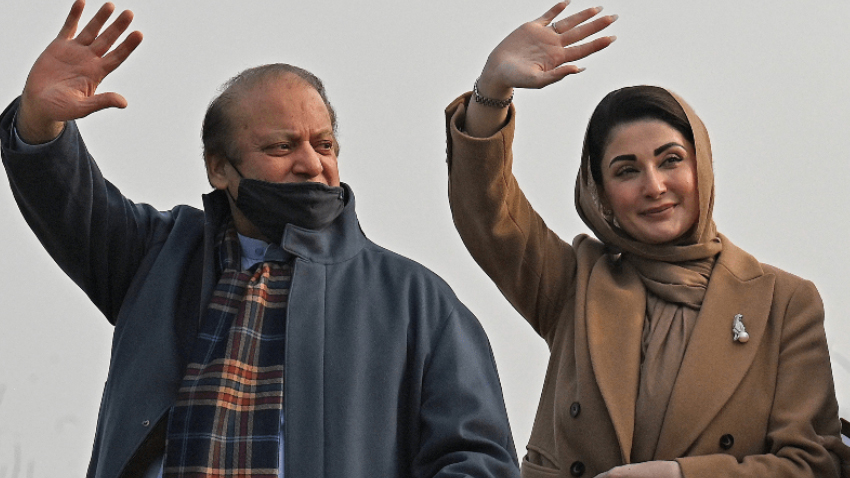
An accountability court in Lahore has approved a request by the National Accountability Bureau to close the Chaudhry Sugar Mills inquiry against former Prime Minister Nawaz Sharif and Punjab Chief Minister Maryam Nawaz.
The decision was announced by Accountability Court Judge Rana Muhammad Arif after hearing a petition filed by NAB Lahore seeking permission to formally end the investigation. The court ruled that the inquiry had been legally closed under the amended accountability laws and that the bureau acted within its legal authority.
During the hearing, NAB prosecutor Intikhab Alam Joiya informed the court that the investigation found no evidence of corruption against Maryam Nawaz and Nawaz Sharif.
He said the bureau could not continue the inquiry because there was no proof of wrongdoing, and amendments to the accountability law had also limited NAB’s jurisdiction.
Lawyer Javed Arshad Bhatti, representing Maryam Nawaz, also presented arguments supporting the request to close the inquiry. The case was related to the financial scrutiny of assets connected to the owners of Chaudhry Sugar Mills, including members of the Sharif family.
Must Read: Cyber alert: these nine NADRA websites are fake so be warned
The court further ruled that Maryam Nawaz can now reclaim the Rs70,000,000 surety bond she had earlier deposited in the case.
Earlier, Maryam Nawaz had approached the Lahore High Court seeking the return of her Rs70,000,000 surety amount. In February, the high court directed the National Accountability Bureau to obtain formal approval from the accountability court before closing the inquiry.
Following the accountability court’s latest decision, NAB confirmed that the surety amount deposited by Maryam Nawaz can now be returned. The development brings an end to a long-running inquiry that had been under legal review for several years.