
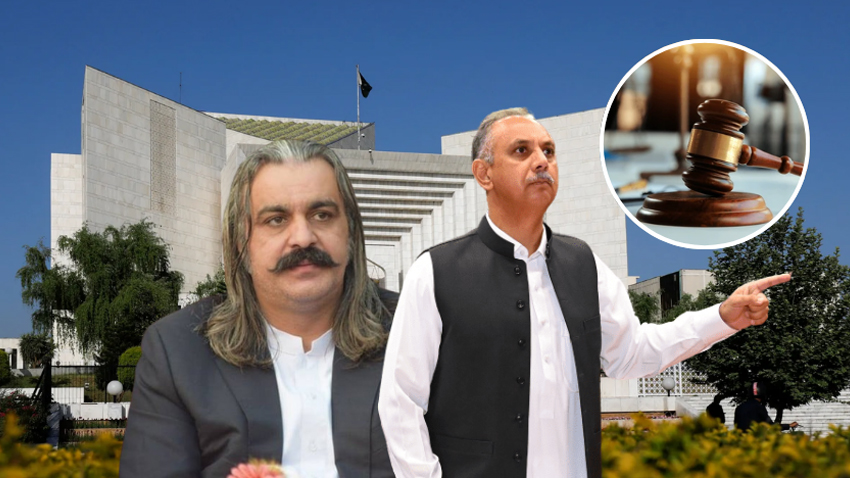
A judicial magistrate in Islamabad declared former Khyber Pakhtunkhwa chief minister Ali Amin Gandapur and former opposition leader Omar Ayub absconders in two cases linked to the 2022 Haqeeqi Azadi March.
The cases relate to protests held by Pakistan Tehreek-e-Insaf after party founder Imran Khan was removed from office through a no-confidence vote in 2022.
Judicial Magistrate Mubashir Hassan Chishti heard the cases, which were registered at Bara Kahu police station. The court issued permanent arrest warrants after both leaders failed to appear despite repeated summons.
Also Read: Hajj 2026 biometric deadline extended
The judge noted that Omar Ayub and Ali Amin Gandapur did not provide any solid reason for staying away from court proceedings. He observed that both leaders continued to avoid the legal process.
Due to their continued absence, the court formally declared them absconders and ordered law enforcement agencies to arrest and present them before the court.
At an earlier hearing, the court had already declared them proclaimed offenders because of their repeated failure to attend the hearings.
Meanwhile, the court acquitted several other accused in the same cases. These include senior PTI leaders Shah Mahmood Qureshi and Zartaj Gul, as the prosecution failed to provide enough evidence against them.
Also Read: Pakistan plans $1 billion investment in AI by 2030
According to police, the cases were filed over alleged law and order violations during the Haqeeqi Azadi March. The police claimed the accused incited people and blocked officials from performing their duties.
The defence strongly rejected the allegations and maintained that the cases were politically motivated and aimed at pressuring opposition leaders.