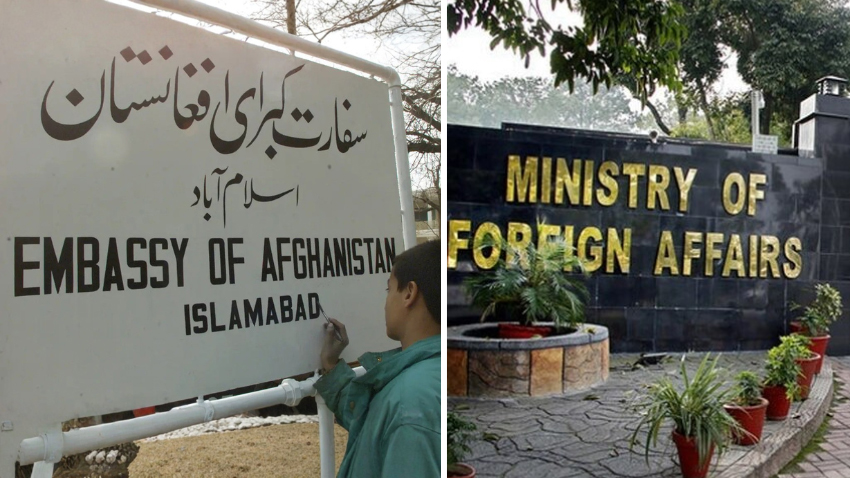
The Foreign Office said Pakistan “condemned in the strongest possible terms the vehicle-borne suicide terrorist attack, followed by a fire raid on Pakistan military and law enforcement agencies’ post in Bajaur, carried out by Tehreek-e-Taliban Pakistan (Fitna al Khwarij)”.
The February 16 attack targeted a joint security checkpost. According to the Inter-Services Public Relations (ISPR), 11 Pakistani security personnel embraced martyrdom, while 12 terrorists linked to what it described as an India-backed proxy were killed in the operation.
In its demarche, Pakistan expressed serious concern that the leadership of the TTP is based in Afghanistan and continues to operate freely from Afghan soil. Officials said Islamabad had received repeated assurances from the Afghan Taliban regime in the past, but no visible or concrete action followed.
Must Read: Pakistan warns Taliban over terrorism from Afghan soil
The Afghan side was asked to take immediate, concrete, and verifiable measures against all terrorist groups operating from its territory, including their leadership.
Pakistan also made it clear that it reserves the right to respond and eliminate TTP militants and their affiliates wherever they are located to protect its soldiers, civilians, and borders.
Security challenges have increased since the Taliban regained control of Afghanistan in 2021. Provinces bordering Afghanistan, especially KP and Balochistan, have seen a sharp rise in cross-border attacks.
Earlier this year, ISPR Director General Lieutenant General Ahmed Sharif Chaudhry said law enforcement agencies carried out 75,175 intelligence-based operations in 2025. Of these, 14,658 were conducted in KP, 58,778 in Balochistan, and 1,739 in other parts of the country.
Must Read: Bajaur attack foiled, 12 militants killed
He said 5,397 terrorism incidents were reported last year, including 3,811 in KP and 1,557 in Balochistan. During counterterror operations, 2,597 terrorists were killed. He added that in 10 major attacks, civilians and soft targets were deliberately targeted, and Afghan militants were involved.
The latest Bajaur attack has once again raised serious questions about regional security and cross-border militancy.