
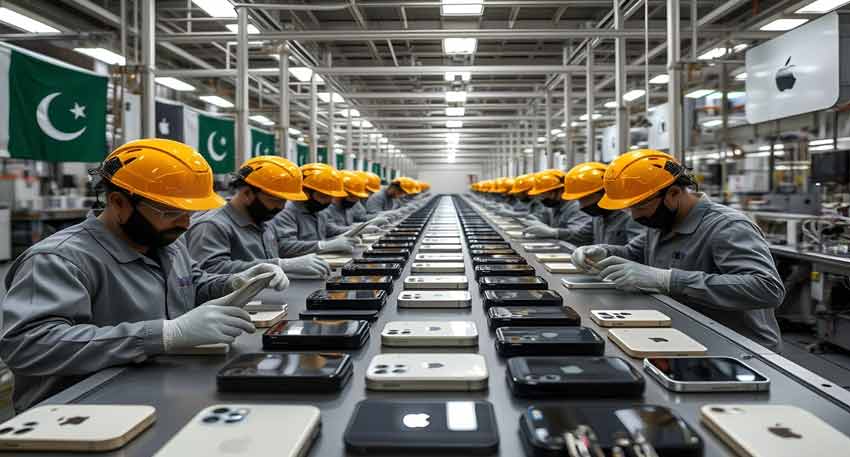
In a major boost for the local tech industry, Apple iPhone manufacturing in Pakistan is moving closer after authorities agreed to offer land at discounted rates and an 8% performance-based incentive. Officials say the initiative could transform Pakistan into a regional hub for electronics production.
Under the proposed framework, Apple iPhone manufacturing in Pakistan will begin in phases. The company is expected to start by refurbishing two to three-year-old iPhones locally for re-export. The government estimates exports worth around $100 million in the first year from refurbished devices alone.
Sources familiar with the policy said Apple iPhone manufacturing in Pakistan follows the same model the company adopted in countries like India and Indonesia. In those markets, Apple initially focused on repairs and refurbishment to train local workers before moving towards full-scale manufacturing.
The Engineering Development Board said incentives for mobile manufacturers are being raised from 6% to 8% to make Apple iPhone manufacturing in Pakistan more attractive and competitive. Officials believe this step will also encourage other global brands to invest in the country.
Also Read: PTA reveals 5G spectrum auction date promising faster internet
Beyond smartphones, the policy targets production of laptops, tablets, smartwatches, and other electronic gadgets. The government also plans to increase localization, pushing manufacturers to use up to 35% local parts in the first year and 50% in later stages.
Analysts say if implemented smoothly, this move could create jobs, boost exports, and strengthen Pakistan’s technology ecosystem. However, timely approvals and consistent policies will be key to turning plans into production.