
US intelligence agencies believe that Iran’s government remains stable and is unlikely to collapse soon, even after weeks of intense US and Israeli military attacks. According to sources familiar with the intelligence reports, Iran’s leadership structure remains largely intact and continues to control the country.
One source said several intelligence assessments show “consistent analysis that the regime is not in danger” and still maintains authority over the Iranian public.
The latest intelligence report was completed only a few days ago and reached the same conclusion about the stability of Iran’s leadership. The conflict has created global concern, particularly due to rising oil prices and increasing tensions in the Middle East.
US President Donald Trump recently suggested that the large-scale American military operation against Iran could end “soon”. However, finding a clear end to the conflict may prove difficult if Iran’s hardline leaders remain firmly in control of the country.
The intelligence reports highlight that Iran’s leadership has remained united even after the killing of Supreme Leader Ayatollah Ali Khamenei on February 28, during the first day of US and Israeli strikes. Israeli officials have also privately admitted that the war may not necessarily lead to the collapse of Iran’s government.
A senior Israeli official told Reuters there is no certainty that the conflict will bring down the ruling system in Tehran. Officials also warned that the situation inside Iran could change quickly as the conflict continues.
Both the Office of the Director of National Intelligence and the Central Intelligence Agency declined to comment on the intelligence reports. The White House also did not immediately respond to requests for comment.
Shifting objectives in the war
Since the conflict began, the United States and Israel have carried out strikes on multiple Iranian targets. These targets include air defence systems, nuclear facilities, and senior members of Iran’s leadership. At the beginning of the operation, Trump urged Iranian citizens to “take over your government”.
Later, senior US officials clarified that the war’s main goal was not necessarily to remove Iran’s leadership. Several senior officials and commanders of the Islamic Revolutionary Guard Corps have been killed in the strikes.
Must Read: Iran sets three conditions to end war with US and Israel
The Islamic Revolutionary Guard Corps, known as the IRGC, is an elite military force that controls large parts of Iran’s security system and economy. Despite these losses, intelligence assessments suggest that the IRGC and the interim leadership remain firmly in control of the country.
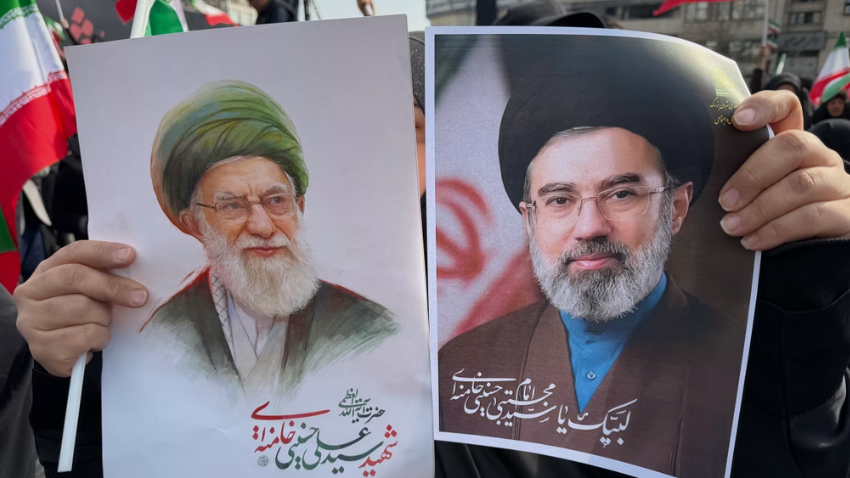
Recently, Iran’s Assembly of Experts named Mojtaba Khamenei, the son of the late leader, as the new supreme leader. Meanwhile, Israeli officials say they do not want any remnants of the previous leadership system to remain in power.
Experts believe that removing Iran’s government would likely require a ground invasion, which could allow citizens to protest safely in the streets. So far, the Trump administration has not ruled out the possibility of sending US troops into Iran.
Kurdish groups and rising tensions
There have also been discussions about the possible involvement of Iranian Kurdish groups based in neighboring Iraq. Reports suggest these groups held consultations with US officials about launching attacks on Iranian security forces in western Iran. Such attacks could potentially increase pressure on Iran’s security agencies and create space for protests against the government.
Abdullah Mohtadi, leader of the Komala Party of Iranian Kurdistan, claimed that many young people inside Iran are ready to fight the government if they receive support. He said there are signs that some Iranian security forces have withdrawn from bases in Kurdish areas due to fears of air strikes. However, recent US intelligence reports question whether Kurdish militias have enough strength to fight Iranian forces.
According to the assessments, these groups lack sufficient weapons and manpower to sustain a long conflict. Officials from the Kurdish Regional Government in Iraq did not immediately comment on the reports. Sources also said Kurdish groups have recently asked US lawmakers for weapons and armoured vehicles. Despite these requests, Trump recently stated that he has ruled out allowing Kurdish groups to launch attacks inside Iran.